Showing posts with label festival. Show all posts

Enjoy a Slice of Germany - Flammkuchen!


Just one slice....well, maybe two...and another beer...


In Germany, Flammkuchen, or Flame Cake decorates nearly every restaurant menu.  When you’re at a fest, look for the long lines. But, among the hungry multitudes, you’ll need a plan.

Plan A:  Pick out a fest, any fest.  Elbow your way to the beer stand and while you slug down your first liter of malt and hops, waddle over to the stone ovens billowing out clouds of flavor.   Hey, it’s autumn, it’s fest time, it’s Flammkuchen time! Too many hungry swine ahead of you?

Plan B:  Grab another liter, link arms and join in a drinking song, and wait.

Can’t find a fest?  Go get your eyes checked!  But, don't’ despair.  Whether you call it Flammkuchen or as the French say, Tarte Flambé, you can be a culinary hero and amaze your lazy friends in your very own kitchen.  

Tarte is a good name for this dish.  Simple.  Hot.  Delicious!  Easier to make than any girl you dated in high school.  The perfect appetizer before, during, or after a football game, or as part of an inebriation ceremony.

Get started before the crowd in your kitchen gets restless and starts pawing through your liquor cabinet.

The crust is severely thin and crisp, almost like a cracker, but the savory taste is all there.  No, it’s not just a thin crust pizza.

Here’s how you do it…this rendition serves 3 men who don’t give a damn, or 14 ladies who are trying to persuade each other they really don’t eat that much.

First preheat the oven to 425ºF (220ºC), then make the crust:

1 1/2 Cups flour
1 Teaspoon salt
A sprinkle of pepper
A sprinkle of nutmeg
1/3 Cup water
2 Tablespoons olive oil

Mix the dry ingredients in a bowl.  Pour in the oil and water and stir with a fork.  Knead by hand until the dough no longer sticks to your fingers.  Provided you’ve used enough flour, this takes no time at all. If it’s still sticky, add a little more flour.
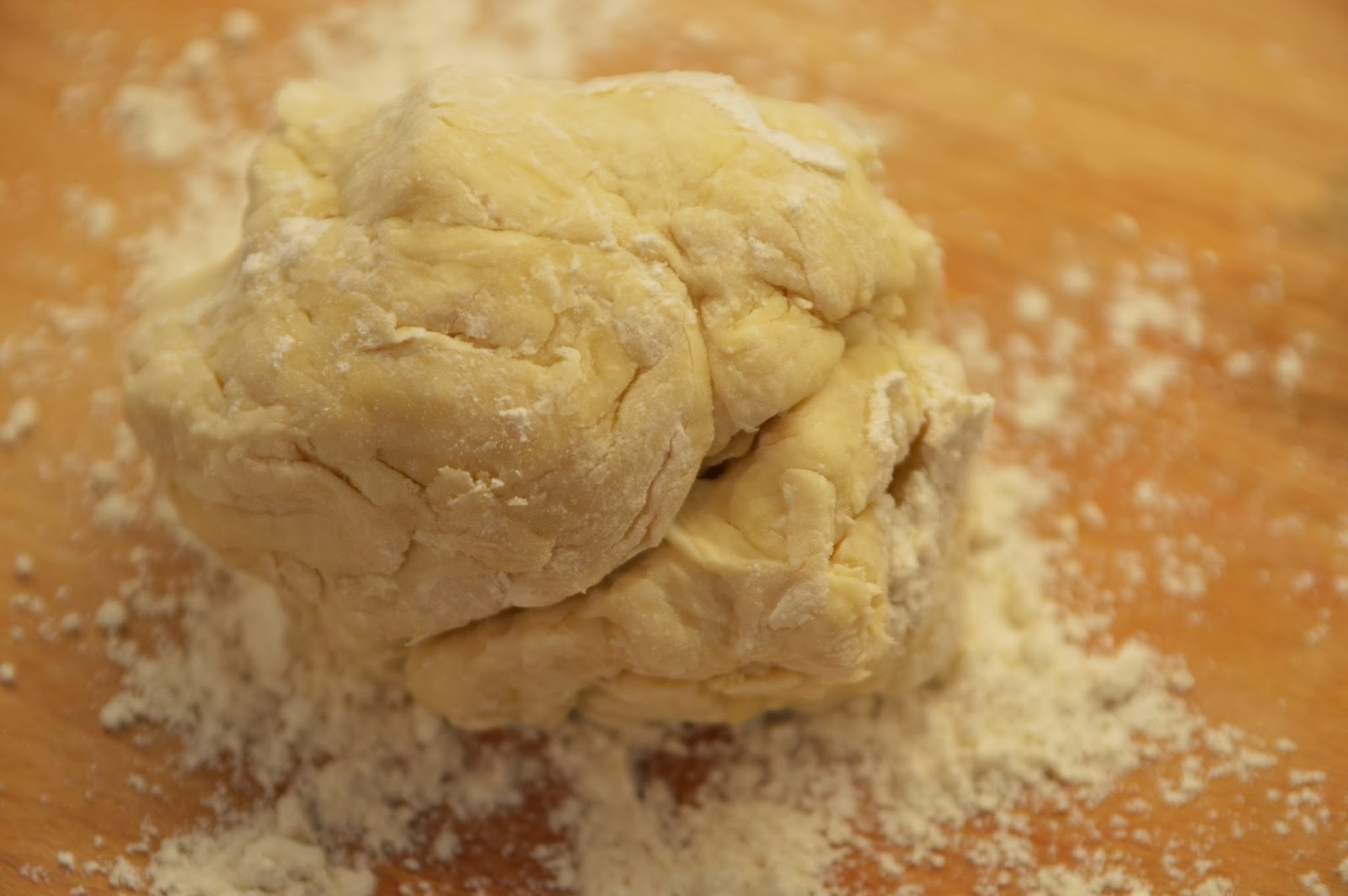
About the size of a man's fist.


Dust your counter well with flour.  Roll the dough out as thin as possible.  I’m talking Wheat Thins® Cracker thin. 

I'm talkin' thin!


Prepare the topping.

3/4 Cup crème frâiche (with herbs is best) If you can’t get crème frâiche, try sour cream, mixed with little bit of heavy cream.

I used traditional toppings, but any topping in any amount will do.  For those who are anal-retentive, or control freaks, I offer these measurements:

3 heaping Tablespoons chopped onions
3 heaping Tablespoons lean, diced bacon
3 heaping Tablespoons chopped pepperoni (the little green, pickled peppers, not the sausage)

Put the bacon and chopped onions in a frying pan and gently sauté until the onions are limp and the bacon nearly crisp.


Place the thinly rolled dough on a baking sheet, spread moderately with crème frâiche, then sprinkle on the toppings.  Bake for 20 to 30 minutes, until the edges are getting a tiny bit charred and the crème frâiche is bubbling….after all, this is Flame Cake!

Raw, naked, and ready for the oven.


There’s also a sweet version. Instead of the savory toppings, just sprinkle sugar over the crème frâiche and add your favorite dessert toppings.

Oh yeah!  You be da cook o da hour! 

Ladies, kiss the cook!  Guys, grab him another liter of beer!

For the neighbors who followed the aroma, get the dog to chase them out of the yard, unless of course they brought more beer.


Out of the oven!  Smell that aroma!

Potatoes and Chestnuts? Hey, a Fest is a Fest!


Wallhalben

At the Potato Fest!
Lots of photos in this post.  Keep scrolling!


The Germans celebrate in the old style, harvests, new wine, beer, seasons.  Most of the fests are in small, picturesque villages whose histories run back centuries.  If it weren’t for the fests, you might forget they were there.  This weekend, with the promise of beer, wurst, and other amusements, we headed out to a Kartoffel (Potato) Fest in Wallhalben, and a Kastanie(chestnut) Fest in Annweiler.

You see, when you picture fests in Germany, expand your mind, learn to think outside the bottle.  Wine and beer, sure, but everything that comes out of the earth, including pumpkins, gets their festival days.  I like it.  Why limit yourself to drinking when there are so many things to do and to eat WHILE you’re drinking.  Listen to live music.  Watch cooks at work over blazing fires.  Gander at musicians and other entertainers in medieval costumes!  No matter the time of year, Germans practically beg you to join in the fun!

What do I mean by picturesque villages?  Small. Rural.  Ancient.  Wallhalben looks like a Disney set for Snow White.  Cobblestone streets.  Stone houses.  Window boxes bursting with colorful blooms.  Grapevines growing over doors and up the sides of buildings.  Then you get to the main square and wonder why you don’t even have to pay admission.  Food stands.  Beer stands. Open faced tents selling everything from stuffed animals to fragrant herbs, cheeses, stone oven breads, and bottles of some of the best wine in the world.  None of these are at rip-off prices, I hastily add.

Potato-Spinach dumplings

Gotta have some cake!

Who could ever forget the beer?

Crowds are smiling and friendly.  I know Germans must get drunk. It’s impossible to live on beer and not have those unfortunate occurrences.  BUT, I have yet to see a sloppy drunk, or an obnoxious drunk, or a combative drunk.  At a fest, everything is done in good fun.  All you have to do is loosen up.


Beauty in every little detail


Told you these are rural villages!


The village well with a crown of wheat

Try some honey wine

Cooking the wurst


Time to move down the road to one of my favorite villages, Annweiller.  Picturesque does not do the town justice.  If Wallhalben was a Disney set, Annweiller is a Disney movie!  A stream runs through a town lined with half-timbered houses, punctuated with old mill wheels that still turn after centuries of use.  The stone streets wind this way and that.  Flowers are on profuse display.  In some places the streets are so narrow, the Tent-shops almost meet in the middle.  Smell the chestnuts roasting, the wood fires, the perfume of grilled meats, and baking flammkucken.   Want a special treat?  Try one of the locally brewed chestnut beers.  Oh, the dark amber goodness that you can only savor once a year!

Annweiler is one of the prettiest villages anywhere!

A river runs down the middle

Local bread dumpling with chestnut dip

Chestnuts roasting on an open fire!

Charred, split, and delicious


Tending the spiesbraten grill 


Local produce


We found a seat among the multitudes and slugged down chestnut beers while munching on flammkuchen.  Know what that is?  It has flat crust, as thin and crispy as a cracker, and it’s topped with a thin cheese and bits of whatever you want.  We chose pepperoni, those hot little green Italian peppers.


As we sat, chewing away, a German couple from Stuttgart sat down in front of us.  Fests are like that.  Sit wherever there’s a seat.  The man sipped a beer and the wife (Frau) garrulously began chatting with the usual questions:  where are you from, are you on holiday in Germany, what kind of beer are you drinking, I don’t like beer, may I have a sip???? In this case, garrulous was not a pejorative term.  Utterly charming.  Germans have not lost the art of friendly conversation.  I tried out my German. She insisted on using English.  Her husband laughed at both of us.  Typical of a fest.  You go to meet people, chat, drink, and have a great time.  We did!


Don’t waste another moment!  Grab your significant other, whom in my case I swear is my wife, and get your thick-skinned rump to a fest!  Prost!

Storming the Castle: just another summer's day

Be sure to scroll down for more photos and enlightenment


Burg Lichtenberg is a cozy little castle, high on a hill overlooking the city of Kusel.  Don’t worry if you haven’t seen it yet.  It’ been standing guard over the valley since 1200 and is not likely to disappear soon.

The neat thing about Lichtenberg is that it’s useful, which is more than you can say for most things built in 1200.  From spring through fall there are festivals.  Also a restaurant.  Also a youth hostel.  No end to the possibilities.

Last weekend was an herb fest, complete with garden ornaments, plants for sale, the obligatory beer and wurst, plus guided herb tours around the castle walls and an explanatory visit to the castle’s own herb garden.

I forget to mention the three-piece band, with middle aged musicians playing and singing John Denver favorites in German and English. Henry John Deutschendorf, Jr. ( his real name) translates well, or at least the emotions do.  Everyone can understand the yearning to go home to West by-god Virginia, or Rocky Mountain High…speaking of herbs.

I learned a few things during the semi-walk around the castle walls.  Camille tea comes from little, white, daisy-like flowers, which I would have known had I paid more attention to the picture on the packaging.  Supposedly, you can also brew a strong batch and use it to heal skin ailments.  I recommend letting it cool first, but hey, you’re your own boss.

The lady who led us around was the college professor who knew too much for our own good.  Apparently, leaving any tidbit out would have been a sin against all of academia.  My mind started to drift when two herbs took the first thirty minutes.  I started to chew weeds and paw the ground. We’d traveled ten meters and it was a loooooog way around the castle walls.  I regretted my lackey hadn’t brought a tent and provisions.  Plus, the soliloquy was in German, so I could only catch every other word:  good, tea, good again, etc.  I yearned for the Cliff Notes.  Time to break ranks and sprint for beer.  Got to the beer stand and put the golden-coldie to my lips just in time.

Next weekend is a much bigger, Medieval Festival, with even more food booths, knights in armor, complete with squires and horses, sword fights, and winsome ladies in flowing gowns.  Beer.  Wurst.  Sunshine.

If you miss that one (and why on earth should you?), I’m sure there are others coming up.  But, if they offer a tour around the castle walls, drag a keg with you.


Bunnies, Baubles, and Eggs! Easter Market in St Wendel

Be sure to scroll down for scintillating comments and more photos!

A fine old historic town!

New Beginnings

Beauty from simple things

The famous Easter Crown


Making Pottery the old fashioned way


Spring is almost here.  How do I know, without even a wayward glance at the calendar?  The St Wendel Easter Market, of course.

Which spurs questions by the truckload, the first being who was Saint Wendel?  That’s Sankt Wendel in German. Hard to tell for sure who he was or when he lived.  Not much is known, other than he seems to have been the son of a Scottish King.  Wendelin means wanderer or pilgrim in old German.  Wendel wandered around 600 A.D., give or take.  When he died, he was buried in the cell he had inhabited for years.  Not sure anybody knows where that is.  They’re still wandering….The town grew up nearby and when in 1320 a pestilence threatened the local livestock, it was said that St Wendel interceded to save them.

When you first enter the St Wendel market, the first thing you notice is a huge crown of pine bows, adorned with strings of eggs.  To be exact, there are some 2000 hand-painted eggs.

Stalls, selling everything from blankets to cheeses line every street.  And the day we were there, the streets were packed.

You find street performers, pens with rabbits of every description, a whole tent dedicated to intricately arranged bunny tableaus, and best of all, lots of glühwein, wurst, and beer.  Also, the best churros I’ve eaten outside of Spain.

On to the questions.  What do rabbits and eggs have to do with celebrating the day that Jesus Christ arose from the tomb?

In pre-Christian Germany (which wasn’t even Germany back then), people worshiped many gods and goddesses, including Eostra, the goddess of both spring and fertility. Her symbol was the rabbit because of the animal’s high reproduction rate.  Eggs also symbolize new life and new beginnings.  Somewhere in the 17th Century, a story popped up featuring eggs and rabbits, or so I’m told.

As pre-Christian Germany converted to Roman Catholicism, many of the pagan traditions and celebrations were cleverly folded into the new religion.  After all, believing is one thing, but giving up holidays and feast days is quite another.  To complete the chain, when German immigrants came to America, they brought their traditions with them, presenting a glorious marketing opportunity for candy factories and greeting card makers.  Egg producers were quick to chime in, along with egg hiders and nest makers.  Heck, you already started with bunnies and eggs, so why not add a little more.

I really don’t give a damn, as long as I get my beer and wurst.  As I said, who wants to give up a feast day?

St Wendel is one heck of a small town, with restaurants and cafes galore.  If you don’t get to the Easter Market this year, mark-it (I love puns) on your list for next year.  Friendly crowds and a lovely celebration.


Have some tea!


Baumbrot - a Romanian tradition

Related Posts Plugin for WordPress, Blogger...