Showing posts with label German wine. Show all posts

Wine Festivals, Big and Small

A Sweet Mosel While

The Mosel itself is worth the trip
Ah, yes, the source of the juice


Don't neglect the German reds!


Many more photos follow my written drivel.


Went to a couple of Weinfests on the Mosel River last weekend.  Friendly crowds, wines galore, and wood fired, grilled meats that will make you swear off vegetables.  

Bernkastel-Kues is one of the largest and most famous, while the Reil wine fest is almost unknown except among aficionados.   I could write volumes about each, but I’m sure you’ll agree photos do a much better job of capturing the celebratory spirit.  Short version:  The big fests have more of everything, including elbow-to-elbow throngs, multiple bands, and food booths that would fill several American malls. The small fests are less of a party atmosphere and while the food can still be exceptional, the focus is on wine and individual vintners.  I relish the big and the small, because most of all, I like German wine.  At fests you can buy wine by the glass or the bottle.  Another note, don’t just stick to the white wines.  German reds have come a long way!

Wine fests are spread across Europe, not just in Germany and not just on the Mosel River. From now through October, you can sip to your heart’s content, eat grilled meats, potato pancakes, and fries, dance with the natives, listen to band music, and get in the Bacchus spirit. Most wine booths will give you a significant price cut if you’re buying the bottles to go.

Two wine fests did not quench my thirst for juice of the grape.  I may have to go back.  If you’d care to join the fun, here’s a list of fests, both past and those to come:


The Mosel River, Moselle in French, starts in the Vosges Mountains in France before flowing for 339 miles through Germany and into Luxembourg.   Funny, I always think of the Mosel as German, probably because it’s one of Germany’s thirteen wine regions.  Some call it a tributary of the Rhine because the two rivers meet in Koblenz.  I say, “Phooey!” but then I say that about a lot of things.  The Mosel Valley is filled with sporting activities.  Hang gliders loft through the air, while boats, canoes, and kayaks try to avoid the huge barges carrying coal and steel.  There are wonderful bike trails and camping sites along either bank, with picturesque villages and historic castles seemingly every mile.  So even if no wine fests are on the agenda, the Mosel is a still worldwide tourist favorite.  As with most tourist destinations, there is a season.  Don’t come in the winter!  Shops and restaurants are buttoned up.

The Big Fest:  Bernkastel-Kues

Spiesbraten and Würst!

Nothing shy about these folks!

Big, but friendly crowds

Bernkastel is a splendid old town.

Ah, a slave to fashion!


Must have been half a dozen major bands.

Frying those delicious potato pancakes

Served with fresh apple sauce, they're delicious!


The small fest at Reil

Small does not mean plain.  Beauty around every corner.


Grapes grow everywhere.  The sign advertises smoked trout.

Less crowded, but still fun.


Local color.

What every wine fest is all about!

If you think it looks good, oh, you should have had a taste!
                                                             

Blanc de Noir


Here’s something from the dark corner of the wine cellar, Blanc de Noir.  What the hell kind of grape is that?  Not a variety of grape.  It means white from black and refers to using dark grapes to produce white wine.  Most of the time you see it on the labels of sparkling wines, many notably from the Champagne region of France.

But there are also lots of still wines that feature Blanc de Noir.  In Germany, much of the time the B de N’s come from the Spätburgunder grape, the German word for Pinot Noir.  How in the living swamp of Mesopotamia does Pinot Noir get translated to Spätburgunder?  You’re about to find out.  Spätburgunder means late Burgundy and refers to the first vines of Pinot planted in Germany coming from Burgundy.  Also, Pinot matures late.

But, lots of other dark grapes can do the job.  In this case, my favorite German weingut (wine grower and seller) Karl Dennhardt, used Cabernet Sauvignon and Lemberger for his 2010 Blanc de Noir.  Pretty much everyone is familiar with Cab, but Lemberger? 

Although not widely known by wine swilling Americans, Lemberger vineyards stretch from Austria to Hungary to Germany.  It’s also grown in Washington State.  It’s a late maturing, dark grape, usually sturdy and rich in tannins, but there is also a softer side to Lemberger and that’s what Dennhardt has tapped into.

But, let’s back up a sec.  Black grapes, white wine?  How does that happen?  Most grape juice is white, but when you squeeze the grapes and leave the juice to soak in the skins, gradually the juice turns dark, absorbing not only the color, but also the tannin.  So, guess what?  If you want a white wine from dark grapes, you juice the grapes and separate the juice from the skins immediately.

In the case of Karl Dennhardt’s Blanc de Noir, you end up with an amazingly sturdy and flavorful dry white wine.  A fragrant, almost yeasty nose kicks in, and your first sip offers notes of pear and plum.  When I say notes, I don’t mean the whole damn song.  Slow sip this dry white a moment and let the nectar float to the back of the throat.  You’ll see what I mean.  It’s full, yet crisp, and lacks that heavily acidic finish you find with many dry whites.

A note on temperature.  Lots of folks think if a white doesn’t have frost on the bottle it’s not cold enough.  Don’t believe it.  Try it cool, but not cold, somewhere north of 60 ºF.  If you don’t like it immediately, give your taste buds a little more time to adjust.  You’ll start to pick up flavors you didn’t know were there.  Another hint:  If it’s not a sparkling wine and the bottle says ‘Serve Chilled,’ I advise you to put it back on the shelf.  There’s something the vintner doesn’t want you to know and he’s using the cold temp to cover up the wine’s shortcomings.

Blanc de Noir pairs perfectly with avocados, salads light on vinegar, shrimp cocktail, fish, ripe fruit, and light desserts.  Don’t despair if you can’t find the Dennhardt label.  It doesn’t travel far.  Find another German Blanc de Noir and enjoy the last days of summer, in a bottle.  You’re gonna be sorry if you didn’t buy a couple of bottles.  Nobody drinks just one.


What Is A Weinfest Anyway?


For my friends who have NOT had the pleasure of  a weinfest, let me explain in photos...

First you find a nice quiet river, like the Mosel...

Add to that a medieval town, little changed in hundreds of years...

Then add a band or six to make it a parade...

block off the streets, for the crowds to drink and drift..

Sell some pretzels

...gather lots to eat...

...including roast meats ...spießbraten

...Lots to drink

...more happy paraders

balloons for the kids

...just one more way to say I love you!

...young and old, in costumes and not

...what's a festival without a queen?

...the parade goes on and on...

...but in the end, it's all about the grapes.

These grapes

...and of course, the wine...

...Until the day drifts harmlessly into evening...


Buying Wine the German Way - Small Vintners, Big Wines

Drop in and taste a few wines...

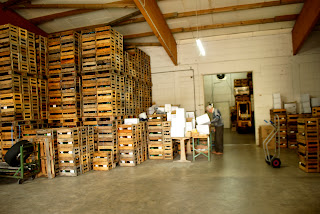
While you're at it, check out the warehouse

..Don't forget the vineyard...

Karl Dennhardt packs up your purchases

...While Frau Dennhardt adds up the bill...

No matter which wines you pick, they're going to be fabulous.

I admit having a fondness for the fermented grape.  Lived in Spain, traveled in France, toured the Napa Valley, blah, blah, blah.  I don’t mean the wines were blah, far from it.  I denigrate no wine before it’s time.  Wherever you are with that sweet someone, whether it’s a sun blinded day, or a drizzling time for snuggles, even if you have a two dollar, screw cap from Jimmy Jon’s Bottle Shop and Shoe Repair, it’s going to be a great wine. Warms your heart just thinking about those bygone days, doesn’t it.

In Germany, you can capture them again. Easily.  The big vineyards in the States have polished presentations and showcase tasting rooms, expansive enough to quench the thirst of busloads of tourists.  But also rather impersonal.  Not knocking that either.  Business is business. 

But, in Germany, the big news is the little news.  Up and down the German Weinstraße, there are hundreds of small-scale weinguts, family businesses, with their own hand-tended vineyards, careful wine production, and sales right out of the family homestead.  It’s fun to taste, but even more fun to get to know a little bit about the people who make the wine and sell it and care about it.

I know what you’re thinking.  If there are hundreds of weinguts, how do you go about picking one?  You have some choices.  Just go from one to another, sipping until you can’t remember your wife’s name, or where she left her purse.  Another, slightly less obnoxious method is to order wine in a restaurant and ask the waitress for the name and address of the weingut.  If she also includes her phone number, you’re a very lucky man.  A third way is to simply go to a friend’s house, drink his wine and before he throws your ass out, ask where he got it.  A fourth and probably the most fun you’ll have being clueless, is to get a map of the Weinstrße and plan a few tasting weekends.

In spring through fall, perhaps the best way is to look for winefests.  Chances are great that any wine you taste at a winefest is a local wine….as in down the street.

Don’t like any of those suggestions?  Go pop a top on a Bud and hunch down in front of the tellie for an afternoon of ‘Who Wants to Be A Loser?’

As it happens, we found a wine we liked at a restaurant.  Asked the waitress.  Walked out with a scrap of paper and all the info.  Now comes the best part: We drove there and all our dreams of a romantic wine tasting came true.  I’m using romantic in the way the word was intended. Enjoying.  Comparing.  Chatting about tastes and smells. Meeting lovely people in a cozy atmosphere that made you never want to leave.  In short, sharing a lovely afternoon with your sweet someone, with no worries, and no cares.

Dennhardt winery sits unobtrusively on a side street in Mußbach, a suburb of Neustadt.  Behind the house is a rather large warehouse, that stores wine production machinery, a small tasting room, and over 100,000 bottles of delicious red, white, and rosé wines.  Behind the warehouse stretch acres and acres of manicured vineyards.  The winery is run by Karl Dennhardt and his wife, both in their 80’s, and anything but old.  Cheery, enthusiastic to the point of exuberance, they invited us into the small tasting room and sat with us as we sampled six or seven of the more than fifteen different wines they produce.  Frau Dennhardt shared stories from her childhood to the present.  Neither she nor her husband speak English, but that didn’t seem to slow anyone down.

I forgot to mention, there was also a party going on.  The Dennhardts had a dozen or more friends in their backyard, eating, drinking, and enjoying themselves.  Frau Dennhart told us she’d made a five-kilo bowl of potato salad.  Out behind the warehouse, big chunks of skewered pork roasted over a wood fire and graced us with a heavenly, smokey aroma.

I asked Karl Dennhardt if it was really ok for us to taste right then.  He told me words to the effect of: hey, at least you’re buying wine.  Those folks out there are eating and drinking for free!  He wasn’t wrong about the buying part.  After a leisurely hour, we came home with seventy bottles.  Better than that, we came home with smiles and memories.

Weingut Karl Dennhardt
Brelten Weg 23a
67435 Neustadt-Mußbach
tele:  0632168367

Spargelzeit - Asparagus At It's Best!

Find a nice restaurant... 
...near a vineyard

...with a certain casual elegance...

...order a dry white, or whatever the chef suggests

...a crisp salad...


Spargel with pan roasted potatoes and Weiner schnitzel


The same, but with turkey steak


In Germany, April brings Spargelzeit (Asparagus season).  You don’t have to mark your calendar.  Restaurant chalkboards everywhere brag “fresh asparagus.”

I view Spargelzeit not only in culinary terms, but also as a harbinger of spring.  Time to drop the top on the cabrio, change to cotton scarves, have a meal al fresco, find another table inside because the sun went behind a cloud and your wife spears you with an icy stare.  When you ask her what’s wrong and she answers “NOTHING!” You’re in trouble.  In this case ‘nothing’ may be translated as “Read my mind, you unfeeling bastard.”  The brave man would sit it out, the coward caves.  She liked it much better inside.

I confess to loving the changing seasons, something I missed where the weather was constantly warm.  Germany has a bunch of seasons to like.  Not just spring, summer, winter, and fall.  There’s asparagus season (April –June), pumpkin season (Sept-Nov), beer season (Ever heard of Oktoberfest?), new wine season (Sept-Oct), strawberry season (June), and kick hell outta the French season (no longer celebrated) to name a few.

In the United States, and I suspect elsewhere, vegetable and fruit seasons are a dying phenomenon.  Supermarket chains scour the globe to being you everything you want, all the time.  Pumpkins in the spring?  Grapes in January?  No problem. But, we lose something in the process of having everything.  What if you celebrated your birthday, or Christmas everyday?  I know what you’re thinking.  Damn, I don’t want to get that old, that fast!

Asparagus (Spargel) served in Germany is almost exclusively the white variety.  Thick, succulent, even a little sweet, the woody stalk must be peeled before it’s cooked, but it’s worth the effort. No wonder the Germans rightly refer to asparagus as edible ivory, or the king of vegetables.  Spargel season is something to celebrate.

Say, isn’t white asparagus the same as green asparagus?  Kinda. There’s no biological difference between white and green asparagus.  The big difference is in the way they’re grown.  In short, white asparagus isn’t allowed to see the sun.  Lots of ways to do that.  Pile dirt on it (called hilling).  Cover it with a black tarp.  Without sunshine, no photosynthesis takes place, hence the paleness.  The result is a much milder and sweeter stalk.  Because it grows longer (green asparagus must be picked young), white asparagus is larger.  Here’s the bottom line for me:  serve white asparagus with a light hollandaise sauce and suddenly everything else on your plate is a side dish.

Traditionally, asparagus is bundled and cooked standing up in salted, boiling water.  If you find it in a market, buy it now.  The season traditionally ends on 24 June, with the feast of St John the Baptist.

Want expert help in cooking and serving?  Put the top down, drive to a sensational restaurant near a vineyard and pick a table inside, with an outside view.  Just sayin’….

Gutshof Bauer's Stuben
Altdorfer Straße 3
67482 Venningen
Tele:  06323-27-34

Related Posts Plugin for WordPress, Blogger...